
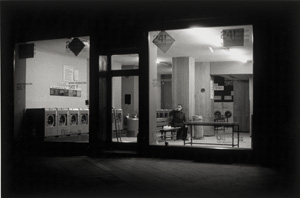
Rau-Häring, Nelly
Berlin, Kreuzberg, Bergmannstrasse
Los 4259
Ergebnis (inkl. Aufgeld) *
625€ (US$ 718)
Berlin, Kreuzberg, Bergmannstrasse. 1983. Gelatin silver print, printed later. 25 x 37,5 cm (sheet 29 x 39,5 cm). Signed, titled and dated by the photographer in pencil and photographer's/copyright stamp on the verso.
For over four decades, Nelly Rau-Häring roamed the streets of Berlin with her camera. Born in Basel, she moved to the city in 1965 to study photography at the Lette Verein. Her work traversed both West and East Berlin, capturing everyday life through expressive portraits, shopfronts, and architectural panoramas. In addition to her street photography, she gained recognition for her press and advertising work, published in magazines such as Du and Die Horen. From 1992-1995, she taught at the Hochschule der Künste (Academy of the Arts) in Berlin. – Minimal fold mark near right edge, otherwise in excellent condition.
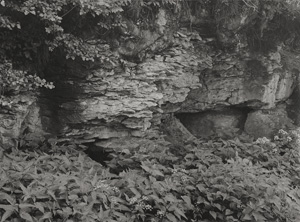
Renger-Patzsch, Albert
Verwitterte Kreide
Los 4260 [*]
Ergebnis (inkl. Aufgeld) *
1.000€ (US$ 1,149)
Verwitterte Kreide. Ca. 1950. Vintage gelatin silver print on Agfa-Brovira paper. 16,5 x 22,4 cm. Photographer's "Renger-Patzsch, Wamel-Dorf über Soest I. W" studio stamp as well as titled in pencil on the verso.
Albert Renger-Patzsch was a central figure of New Objectivity photography in Germany, known for his precise, unsentimental approach in depicting the material world. His work focuses on plants, industrial structures, landscapes, and everyday objects, rendered with sharp detail and an emphasis on form, texture, and clarity. – Edges slightly rubbed, some minor surface irregularities, otherwise in near excellent condition.
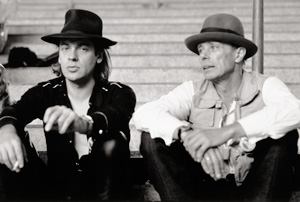
Rocholl, Karin
Udo Lindenberg and Joseph Beuys, Bochum
Los 4261
Nachverkaufspreis
700€ (US$ 805)
Udo Lindenberg and Joseph Beuys, Bochum. 1982. Gelatin silver print, printed 2025. 30 x 45 cm (sheet 40 x 50,3 cm). Signed, copyrighted, dated, titled and editioned "14/24" by the photographer in pencil on the verso.
The photojournalist Karin Rocholl is well-known for her extensive portfolio of portraits featuring cultural figures. Her ability to establish a close rapport with her subjects often enables her to capture elusive and prominent individuals in a more authentic and unguarded moment. A significant portion of her work has been published in the pages of Stern magazine. – Minimal handling dent in lower portion, otherwise in excellent condition.
Lit.: Karin Rocholl. Prominente im Porträt: Der zweite Blick. Munich: Knesebeck, 2013.
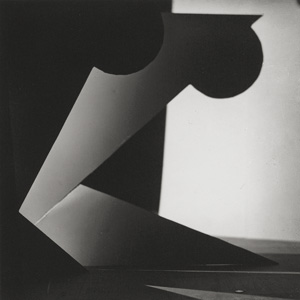
Rössler, Jaroslav
Jaroslav Rössler. 10 Photographs 1923-1930, Portfolio 4
Los 4262
Ergebnis (inkl. Aufgeld) *
3.750€ (US$ 4,310)
Jaroslav Rössler. 10 Photographs 1923-1930, Portfolio 4. 10 gelatin silver prints, printed 1982 from the original negatives under the supervision of the photographer, mounted in photo corners in mats. Each ca. 24 x 23,4 cm (mounts 35,5 x 28 cm). Each signed by the photographer in pencil in the lower margin; each with portfolio stamp on the verso, therein numbered “23” (of 30). Presented in the original canvas clamshell box with text and colophon sheet. Rudolf Kicken Gallery, Cologne, 1982.
Jaroslav Rössler studied under the photographer Frantisek Drtikol in Prague from 1917-21, later working in his studio. In the late 1920s and early 1930s Rössler lived and worked in Paris, the period during which the images in the present portfolio were made.
The titles include: Cardboard Construction in Light and Shadows; Shapes in Light and Shadows; Enigmatic Relief in Cardboard; Still Life with Bowl; Light Well; Eifel Tower; Telephone Cables; January 25, Paris, 1927; Radio World and Glass Reflections. – Some prints with small retouched spots, a few prints with minimal silver mirroring in shadow areas, otherwise in excellent condition.
Lit.: Josef Moucha, ed. Jaroslav Rössler: Abstract Photography 1923-1978. Chrudim: Galerie Art, 2005, ill. pp. 20, 23.
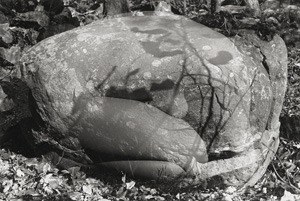
Nude with rock (double exposure). 1982. Gelatin silver print on Agfa paper. 31 x 46,5 cm (sheet 40,2 x 50,2 cm). Signed and editioned "4/15" by the photographer in ink on the verso.
Before photography became Ernestine Ruben’s main interest, completely different areas of art, especially dance and sculpture, shaped her life and work. Her photographic work shows clear traces of this. By means of reduction and minimalization, Ernestine Ruben finds her individual form of expression, which ranges from simple representation to total abstraction. Often only a second glance is able to unravel her composition of forms, her play with light and shadow of movement and counter-movement, of the human and the natural. Her work has been exhibited and collected extensively in Europe and Asia as well as the United States. – In very good condition.
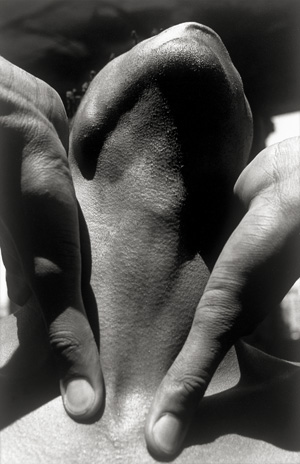
Choke. 1987. Gelatin silver print, mounted to overmat. 35,2 x 27,5 cm. Signed, editioned "3/15" by the photographer in ink and number in pencil on the verso.
In very good condition.
Lit.: Jean-Luc Monterosso, Dirk Bennett, and Ann Morris. Ernestine Ruben: Photographien-Photographs-Photographies. Schaffhausen: Stemmle, 1989, ill. p. 17.
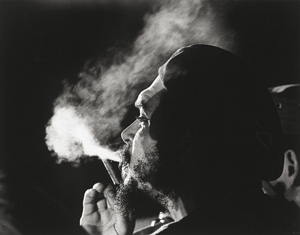
Che Guevara with cigar. 1963. Gelatin silver print, printed later. 37 x 47,2 cm (sheet 43,8 x 54 cm). Signed and dated by Roberto Salas in the lower margin; with “Salas, Cuba” and “Salas, Habana Cuba” copyright stamps embossed in the lower margin.
Some handling creases; a small smudge mark in the lower margin, otherwise in good condition.
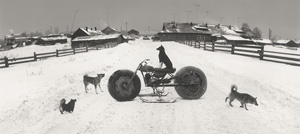
Sammallahti, Pentti
Solovki, White Sea, Russia
Los 4266 [*]
Ergebnis (inkl. Aufgeld) *
2.500€ (US$ 2,874)
Solovki, White Sea, Russia. 1992. Pigment print on heavy vellum paper. 25 x 54,5 cm (sheet 48 x 77,5 cm). Signed, dated and annotated as artist proof by the photographer in pencil in lower margin. Framed under plexiglass in wooden frame.
The photographs of Pentti Sammallahti are imbued with the cool, subdued light of his native Finland. He began photographing at the age of eleven, influenced by his grandmother, a Swedish-born reportage photographer, and went on to develop a deeply personal visual language. His black-and-white images are marked by a quiet, almost timeless stillness, observing the coexistence of nature and human presence without imposing judgment or conflict; animals - especially dogs - recur as subtle protagonists within these landscapes. Blending documentary sensitivity with a poetic sensibility, Sammallahti’s work has influenced a generation of photographers and earned the admiration of Henri Cartier-Bresson, who included him among his one hundred favorite photographers for the inaugural exhibition of the Fondation Henri Cartier-Bresson in Paris. – In very good condition (not examined outside frame).
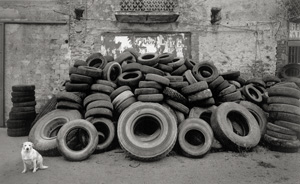
Sammallahti, Pentti
Cilento, Italy (Dog and tire pile)
Los 4267
Ergebnis (inkl. Aufgeld) *
1.000€ (US$ 1,149)
Cilento, Italy (Dog and tire pile) 1999. Vintage gelatin silver print. 12,7 x 20,3 cm (sheet 19,1 x 27,5 cm). Signed and dated by the photographer in pencil in the margin lower right.
A beautiful tonal print in excellent condition.
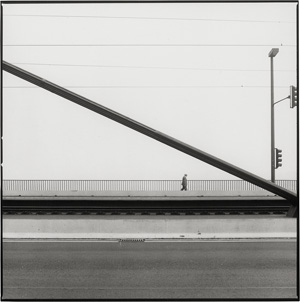
Schopp, Rainer Maria
Düsseldorf/Rheinbrücke
Los 4268
Ergebnis (inkl. Aufgeld) *
813€ (US$ 934)
Düsseldorf/Rheinbrücke. 1982. Vintage gelatin silver print. 28 x 28 cm. Photographer's stamp, therein titled and dated in ink on the verso.
Rainer Maria Schopp captured life in Berlin, across Europe, and in the United States through often poetic and quietly observational images. He studied graphic design at the Hochschule der Künste Berlin from 1969-74, and from 1976 worked as a freelance photographer. In 1978, he joined the printing workshop of the Berufsverband Bildender Künstler (BBK) at the Künstlerhaus Bethanien; his promising career was cut short by his tragic death at the age of 47. – Lower right corner slightly bumped, otherwise in excellent condition.
Lit.: Galerie Mönch Berlin, ed. Rainer Maria Schopp: Seitenblicke (exhibition catalogue). Berlin, 2020, ill. p. 5.
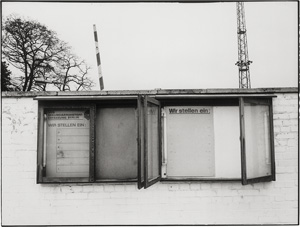
Schopp, Rainer Maria
Berlin, Mahlsdorf, Pfingsten
Los 4269
Ergebnis (inkl. Aufgeld) *
438€ (US$ 503)
Berlin, Mahlsdorf, Pfingsten. 1991. Vintage gelatin silver print. 33,7 x 44,3 cm. Photographer's stamp, therein titled and dated in ink, number in pencil and gallery label on the verso.
Light dent in upper right margin, traces of previous mounting in upper right corner on verso, otherwise in very good condition.
Lit.: Galerie Mönch Berlin, ed. Rainer Maria Schopp: Seitenblicke (exhibition catalog). Berlin, 2020, ill. p. 4.
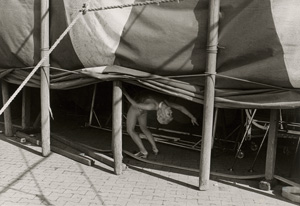
Aachen. 1975. Vintage gelatin silver print on Agfa paper. 21,5 x 31,5 cm (sheet 29,2 x 38,2 cm). Signed, titled and dated by the photographer as well as layout notes in pencil and photographer's stamp on the verso.
Born in Dortmund, Wilhelm Schürmann initially studied chemistry while practicing photography, to which he soon devoted himself professionally. From the 1970s, he held teaching positions and, in 1981, was appointed professor at RWTH Aachen University; between 1973-1977 he co-directed the Lichttropfen Gallery in Aachen with Rudolf Kicken. Working within the tradition of European and American street photography, his images incorporate elements of contemporary pop culture - everyday graphics, wallpaper, postcards, and fashion - as pictures within the picture. Often organized in open series, his work reflects an engaged view of society, foregrounding the coexistence of contradictions. – Handling dent in lower edge within image, handling dent and red mark in right margin as well a lower right corner bumped, otherwise in very good condition.
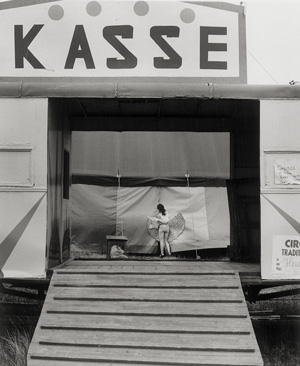
Dornumersiel.1976. Vintage gelatin silver print on Agfa paper. 28,7 x 23,5 cm (sheet 38,5 x 29,5 cm). Signed, titled and dated by the photographer in pencil on the verso.
Light traces of previous mounting in upper edge on verso, small retouched mark in upper right in margin, otherwise in excellent condition.
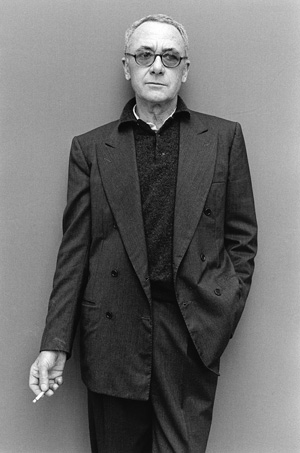
The artist Gerhard Richter. 1991. Gelatin silver print, printed later. 27,2 x 18 cm (sheet 30,6 x 20,8 cm). Signed by the photographer in pencil as well as photographer's stamp and edition stamp on the verso.
A few light handling dents, a few small creases in lower left corner, otherwise in good condition.
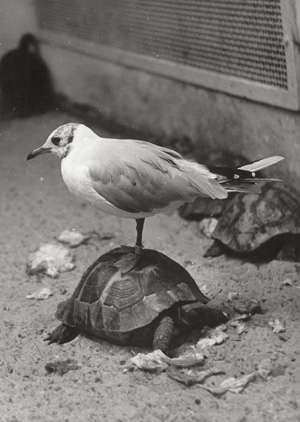
Seidenstücker, Friedrich
Lachmöwe
Los 4273 [*]
Ergebnis (inkl. Aufgeld) *
1.500€ (US$ 1,724)
Lachmöwe. 1930s. Vintage gelatin silver print on Agfa-Brovira paper. 17,9 x 13 cm. Photographer's studio stamp as well as annotated in pencil on the verso.
Friedrich Seidenstücker is best known for his animal photography, particularly images made at the Berlin Zoological Garden in the 1920s-1930s. Rather than presenting animals as spectacle, he approached them with a sculptural sensibility, emphasizing form, posture, and physical presence through careful observation and restrained composition. His work reflects both his training as a sculptor and the New Objectivity ethos, treating animals as autonomous subjects within a modern photographic framework. – Some scuff marks, a small ink stain, and faint traces of silver mirroring; otherwise in good condition.
[*]: Regelbesteuert gemäß Auktionsbedingungen. [^]: Ausgleich von Einfuhr-Umsatzsteuer.
* Alle Angaben inkl. 25% Regelaufgeld ohne MwSt. und ohne Gewähr – Irrtum vorbehalten.
Galerie Bassenge
Erdener Str. 5A
14193 Berlin
Öffnungszeiten:
Montag bis Donnerstag, 10–18 Uhr,
Freitag, 10–16 Uhr
Telefon: +49 30 8938029-0
Fax: +49 30 8918025
E-Mail: info (at) bassenge.com
Impressum
Datenschutzerklärung
© 2026 Galerie Gerda Bassenge
Galerie Bassenge
Erdener Str. 5A
14193 Berlin
Öffnungszeiten:
Montag bis Donnerstag, 10–18 Uhr,
Freitag, 10–16 Uhr
Telefon: +49 30 8938029-0
Fax: +49 30 8918025
E-Mail: info (at) bassenge.com
Impressum
Datenschutzerklärung
© 2026 Galerie Gerda Bassenge